

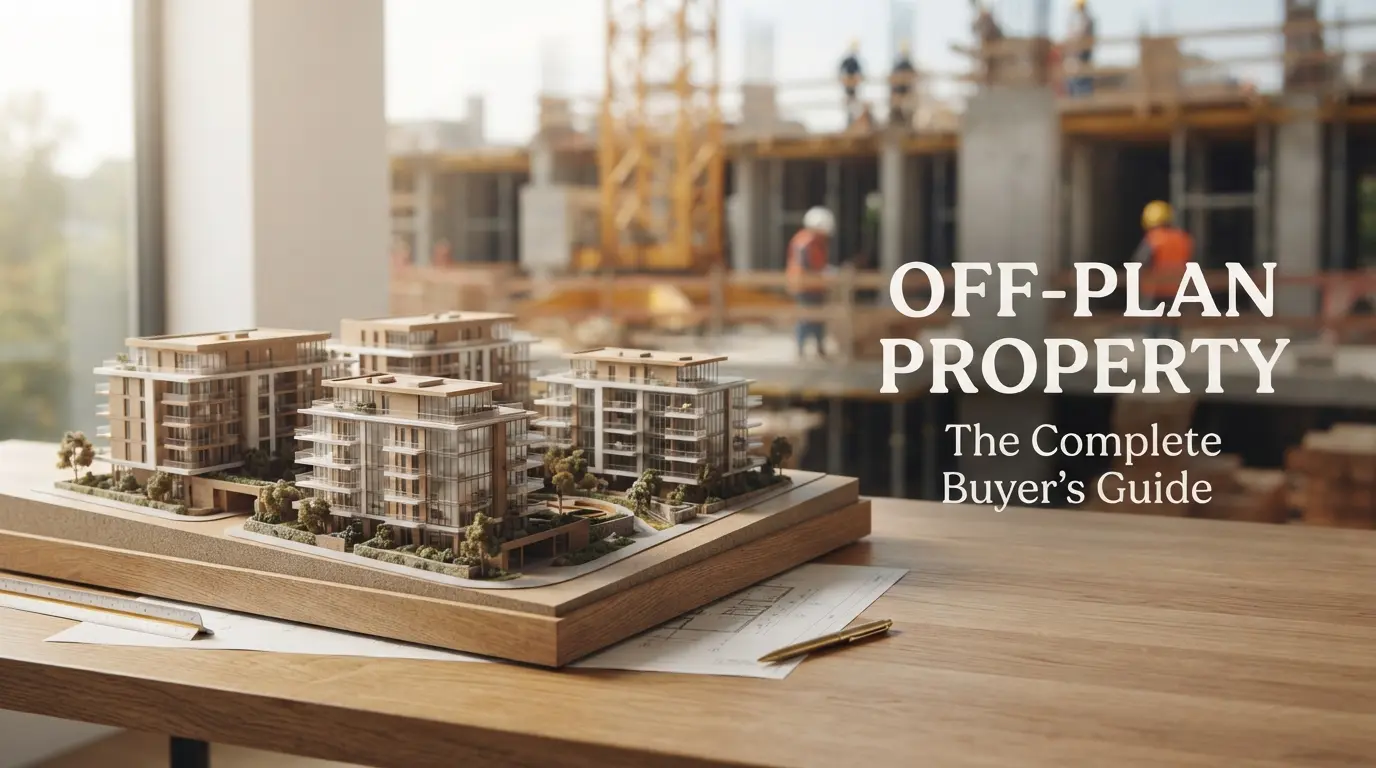
Off-plan property is real estate purchased directly from a developer before or during construction, where you buy based on architectural plans and renders rather than a finished building. You pay in stages as construction progresses and receive the completed unit months or years later.
This guide walks you through how off-plan purchases work in Nigerian markets, the advantages and risks involved, how to verify a developer before committing funds, and what title documents to check before signing anything.
What is off-plan property
Off-plan property is real estate you buy directly from a developer before or during construction. You're purchasing based on architectural blueprints, floor plans, and digital renders rather than walking through a finished building. The developer uses your payment, along with funds from other buyers, to finance construction. You receive the completed unit months or sometimes years later.
This arrangement is common across Nigerian cities like Lagos, Abuja, and Port Harcourt. Developers pre-sell units in estates still under construction, and buyers commit money early, often at a lower price than the projected market value at completion. The trade-off? You wait, and you accept some uncertainty about the final product.
How buying off-plan property works
The off-plan purchase process follows a predictable sequence, though timelines vary by developer and project size. Knowing each stage helps you understand what to expect and where to pay close attention.
1. Reserve the unit
You start by paying a reservation fee, sometimes called an expression of interest, to hold a specific unit. This fee secures your place and takes the unit off the market.
Most reservation fees are non-refundable. So before you pay, confirm you actually want to proceed with the purchase.
2. Sign the sale agreement
After reservation comes the formal contract. This document spells out the payment schedule, expected completion date, unit specifications, and what happens if either party defaults.
Have a property lawyer review the agreement before you sign. The terms here determine your rights if something goes wrong later.
3. Pay by construction milestones
Your remaining payments typically follow construction progress. You might pay a portion when the foundation is complete, another when roofing finishes, and a final tranche at handover.
Some developers offer spread payment plans where you pay fixed monthly amounts regardless of construction stage. Either way, your money flows out over time rather than all at once.
4. Inspect at snagging
Before final handover, you get a snagging inspection. This is your chance to walk through the unit and identify defects: cracked tiles, faulty plumbing, doors that don't close properly.
The developer is expected to fix identified issues before you make your final payment. If you can, bring someone with construction knowledge to spot problems you might miss.
5. Take handover and title transfer
Once snagging issues are resolved and you complete payment, you receive your keys and title documents. Verify that all documents are in order before signing off. This is the point where the property legally becomes yours.
Key documents to collect at handover:
- Deed of Assignment
- Payment receipts
- Approved building plans
- Survey plan
Advantages of buying off-plan property
Buying before construction finishes comes with real benefits, though none are guaranteed.
Lower entry price
Developers often price off-plan units below what they expect to charge at completion. They do this to attract early buyers and generate construction capital. If the market holds or rises, you enter at a discount.
Capital appreciation before handover
As construction progresses and the surrounding area develops, your unit's value may increase. Some buyers have sold their contracts (with developer approval) before handover, capturing gains without ever moving in.
Flexible payment plans
Spreading payments over 12–24 months is easier on your cash flow than paying full price upfront for a completed property. This makes off-plan accessible to buyers who have steady income but limited savings.
Choice of unit and finishes
Early buyers often get first pick of floor levels, corner units, or preferred orientations. Some developers allow you to select tile colors, kitchen finishes, or bathroom fixtures. Once construction advances, these options typically disappear.
Risks of buying off-plan property
Off-plan purchases carry risks that completed properties do not. Being honest about what can go wrong helps you decide whether this route suits your situation.
Construction delays
Projects frequently miss their completion dates. Funding gaps, permit delays, supply chain problems, and contractor disputes all cause setbacks. A project promised for December might deliver in March of the following year, or later. Build buffer time into your plans.
Developer default and project abandonment
Some developers run out of money mid-construction. Others disappear entirely. If this happens, you may be left with an incomplete structure and no clear path to recovering your funds. This risk is real in Nigerian markets, where enforcement of buyer protections is inconsistent.
Title and land ownership disputes
If the developer lacks clear title to the land (no Certificate of Occupancy, no Governor's Consent, or disputed ownership), you inherit that problem. You could pay in full, receive your keys, and later face legal challenges to your ownership.
Final build falling short of the brochure
Marketing renders show the best possible version of a project. The actual construction may use cheaper materials, deliver smaller rooms, or omit promised amenities like a gym or swimming pool. What you see in the brochure is not always what you get.
How to verify a developer before you buy off-plan property
Due diligence protects you from the worst outcomes. The steps below take time but can save you from losing your investment.
1. Check the company registration and track record
Verify the developer is registered with the Corporate Affairs Commission (CAC). Then research their history. How many projects have they completed? Did those projects deliver on time? A developer with multiple finished estates is a safer bet than one with only renders and promises.
2. Visit previous completed projects
Go to estates the developer has already handed over. Walk the grounds. Talk to residents. Ask about construction quality, how long handover took, and whether the developer honored their commitments. This tells you more than any brochure.
3. Confirm land title and building approvals
Request copies of the Certificate of Occupancy (C of O), Governor's Consent (if the land was transferred), survey plan, and building approval from the relevant state authority. Have your lawyer verify the documents are genuine and that the land is free of encumbrances.
4. Review the sale agreement with a lawyer
A property lawyer can spot problematic clauses: vague completion dates, no refund provisions, excessive penalty fees. The cost of legal review is small compared to the cost of signing a bad contract.
5. Insist on escrow or milestone-based payments
Escrow accounts hold your funds with a neutral third party until construction milestones are independently verified. This protects you if the developer fails to perform. Not all developers offer escrow, but those who do signal greater accountability.
Title documents to check for off-plan property in Nigeria
Understanding the documents below helps you ask the right questions and spot red flags.
- Certificate of Occupancy (C of O): The primary evidence of land ownership issued by the state government. Without this, the developer's claim to the land is weak.
- Governor's Consent: Required when land with an existing C of O is transferred to another party. If the developer bought the land from a previous owner, this document confirms the government approved that transfer.
- Deed of Assignment: The contract that transfers ownership rights from seller to buyer. Once registered, this is your proof of purchase.
- Survey plan: An official map showing the exact boundaries of the land. This confirms the developer is building on the land they claim to own.
- Building approval: Permission from the state or local planning authority to construct on the site. Without this, the building may face demolition orders.
Off-plan property payment plans and structures
Developers offer different payment arrangements. Knowing the options helps you choose what fits your finances.
| Payment Structure | How It Works |
|---|---|
| Outright payment | Full payment at reservation, often with a 5–15% discount |
| Milestone-based | Payments tied to construction stages (foundation, roofing, finishing) |
| Spread payment | Fixed monthly installments over 12–24 months regardless of construction progress |
| Flexible plan | Customized schedule negotiated directly with the developer |
One thing to confirm: whether your payments go into an escrow account or directly to the developer. Escrow offers protection; direct payment does not.
Off-plan property price ranges across Nigerian cities
Prices vary widely by city and neighborhood. The tiers below give you a general sense of where different markets sit.
| City | Typical Off-Plan Market Tier |
|---|---|
| Lagos (Lekki, Ikoyi, Victoria Island) | Mid-market to premium |
| Abuja (Maitama, Wuse, Jabi) | Mid-market to premium |
| Port Harcourt (GRA, Peter Odili) | Entry-level to mid-market |
| Enugu (Independence Layout, GRA) | Entry-level to mid-market |
| Asaba | Entry-level |
Treat the tiers above as directional. Prices shift with market conditions, so verify current figures against active listings before budgeting.
Off-plan property vs ready property
Choosing between off-plan and completed property depends on your timeline, risk tolerance, and financial situation.
| Factor | Off-Plan Property | Ready Property |
|---|---|---|
| Price | Often lower at purchase | Market rate at time of sale |
| Payment | Spread over construction period | Usually full payment upfront |
| Risk | Developer default, delays, quality gaps | What you see is what you get |
| Customization | Sometimes available | Limited or none |
| Move-in timeline | Months to years | Immediate |
Off-plan suits buyers who can wait and accept uncertainty in exchange for potential savings. Ready property suits buyers who want certainty and immediate occupancy.
Buy off-plan property with verified listings
Finding a trustworthy off-plan project takes research. Realinkr vets developers and listings before they go live, verifying land title and construction status so you can filter out risky projects early.
On the platform, you can search off-plan listings by city, budget, and payment plan. You can book virtual tours, chat with developers, and connect with Realinkr-verified agents who meet professional and ethical standards.
Explore verified off-plan listings
Frequently asked questions about off-plan property
Can I resell an off-plan property before completion?
Yes, many developers allow assignment of the contract to a new buyer, though some charge a transfer fee. Confirm the resale policy in your sale agreement before signing.
Can I get a mortgage for an off-plan property in Nigeria?
Some Nigerian banks offer construction-linked mortgages for off-plan purchases, but eligibility depends on the developer's relationship with the lender. Ask the developer which banks they partner with.
What happens if the developer abandons the project?
You may lose funds unless payments were held in escrow or the sale agreement includes a refund clause. This is why verifying the developer and using escrow matters.
Can I cancel an off-plan purchase and get a refund?
Refund terms vary by developer and are spelled out in the sale agreement. Some contracts allow partial refunds minus administrative fees, while others are non-refundable.
Is buying off-plan property safer than buying land directly?
Off-plan purchases shift construction risk to the developer but introduce new risks like delays and project abandonment. Buying land gives you control but requires you to manage building yourself.