
You have renders, a site, and a launch date. What you do not have is a list of buyers ready to commit the moment you go live. That gap between "project approved" and "sold out" is where most developments stall.
This guide covers the phased timeline, waitlist tactics, and digital channels that turn pre-launch months into a pipeline of qualified reservations.
What pre-launch demand generation means for property developers
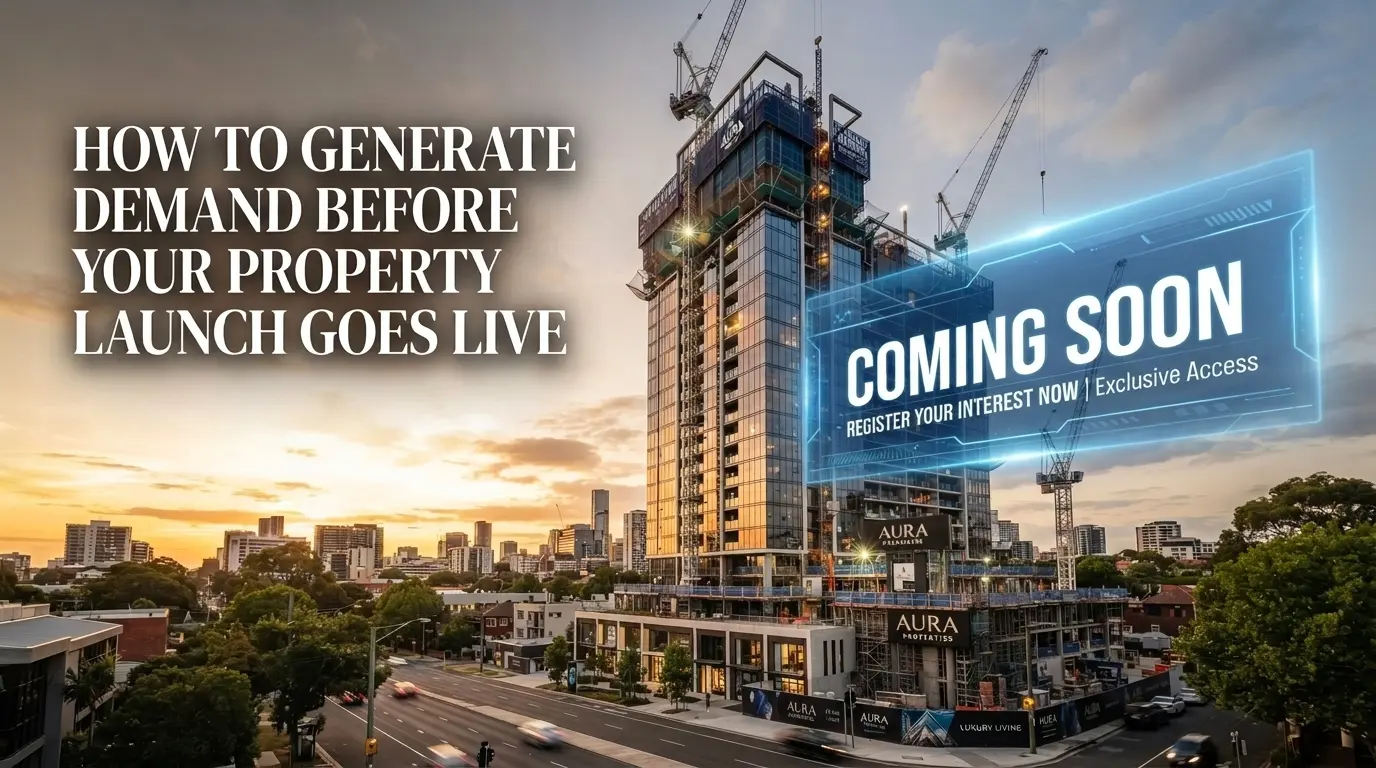
Generating demand before a property launch requires building a compelling narrative, early visual assets, and a targeted waitlist months in advance. You are not waiting for launch day to start marketing. Instead, you are capturing buyer interest, collecting contact details, and warming prospects so they are ready to commit the moment your development goes public.
Pre-launch demand generation is the work that happens before your project is officially available. Buyers cannot walk through the property yet, so your job is to help them see the lifestyle, the neighborhood, and the investment potential before a single wall goes up. The term "coming soon" marketing describes this phase: building anticipation, creating exclusivity, and positioning your development as something worth waiting for.
Why the pre-launch window decides whether your project sells out
The pre-launch period is when you capture the most motivated buyers with the least competition. Investors and first-time buyers actively searching for off-plan opportunities often want early-bird pricing. If you wait until launch day to start marketing, you are competing with every other development that went live the same week.
Waiting too long creates what developers call a cold launch. You announce the project, but no one is paying attention because you have no waitlist and no warm leads to contact. Without early buzz, you face price pressure and longer sales cycles because buyers have no urgency.
In the Nigerian market, buyer skepticism runs high. Stories of abandoned projects and title disputes make people cautious. The pre-launch window is your chance to build trust before asking for money, and developers who invest in this phase sell out faster than those who skip it.
When to start marketing before your property launch
Pre-launch marketing is a sustained campaign with distinct objectives at each stage. Starting early gives you time to build assets, capture leads, and warm your audience before the public launch.
12 months out: lock positioning and content assets
Positioning is the distinct story and market angle for your development. What makes this project different from the dozens of others in Lekki or Abuja? This is the time to answer that question.
Your tasks at this stage include finalizing brand identity, key messaging, professional 3D renders, drone footage of the site, and neighborhood content. These assets form the foundation of every ad, email, and social post that follows.
6 to 12 months out: build the buyer waitlist
Now you start collecting interest. A landing page with an opt-in form is the minimum. Lead magnets like downloadable floor plans, pricing guides, or neighborhood investment briefs give people a reason to share their contact details.
Teaser campaigns on Instagram and Facebook introduce the project without revealing everything. The goal here is list-building, not sales. You want names, phone numbers, and email addresses you can nurture over the coming months.
3 to 6 months out: convert waitlist into reservations
This is when interest turns into commitment. Early-bird pricing, typically 5–10% below the anticipated public price, rewards waitlist members for their patience. Exclusive previews and deposit collection move serious buyers from "interested" to "reserved."
Drip content keeps your waitlist engaged. Construction updates, neighborhood highlights, and reminders about limited availability all push prospects toward a decision.
30 days out: prime the launch wave
The final countdown focuses on momentum. Social proof matters here: testimonials from early reservers, media coverage, and countdown posts on social media. You are preparing for a launch day that feels like an event.
| Phase | Timeline | Primary Objective | Key Actions |
|---|---|---|---|
| Positioning | 12 months out | Lock story and assets | Branding, renders, neighborhood content |
| Waitlist building | 6–12 months out | Capture early interest | Landing page, lead magnets, teaser ads |
| Pre-sales | 3–6 months out | Convert interest to reservations | Early-bird pricing, deposit collection |
| Launch prep | 30 days out | Maximize launch momentum | Countdown campaigns, social proof |
How to build a buyer waitlist before groundbreaking
A waitlist landing page is the engine of pre-launch demand. The page itself is simple: a clear value proposition, a single opt-in action, and mobile optimization. Nigerian buyers often browse on their phones, so a page that loads slowly or displays poorly on mobile loses leads.
Capture the information you actually need: name, phone number, budget range, and preferred unit type. Asking for too much detail upfront creates friction. You can qualify leads further once they are on your list.
Lead magnets give people a reason to opt in:
- Downloadable floor plans: Buyers want something tangible to review and share with family
- Early pricing guide: Creates urgency and positions the waitlist as exclusive access
- Neighborhood investment brief: Appeals to first-time investors seeking location data
Once someone joins your list, keep them warm with WhatsApp broadcasts and email sequences containing construction updates, neighborhood news, and early-bird reminders.
How to position an off-plan development buyers actually want
Buyers purchase transformation and lifestyle, not square meters. The technical specifications matter, but they are not what makes someone commit to an off-plan property. The story comes first.
Nigerian buyers care about neighborhood reputation, proximity to work, security, and investment potential. A development in Ibeju-Lekki appeals to investors betting on the Lekki Free Trade Zone. A gated community in Ajah appeals to young families seeking safety and community.
Weak positioning leads with specs: "3-bedroom apartment with 150sqm." Strong positioning leads with outcome: "Your family's first home in a gated Lekki community with 24-hour power." The second version connects the property to a desirable future state.
How to build buyer trust before a single unit is built
The trust deficit in African real estate is real. Buyers have heard stories of developers who collected deposits and disappeared, or projects that stalled for years. Your job is to prove you are different.
Verification and documentation signals matter:
- LASRERA registration: Mandatory for Lagos developments, signals regulatory compliance
- Title documentation: Publish C of O or Governor's Consent status upfront
- Past project galleries: Show completed developments with real move-in photos
- Video testimonials: Feature actual buyers discussing their experience
Diaspora buyers, who often cannot visit sites in person, rely heavily on these signals. A developer who makes documentation easy to find online earns trust faster than one who hides it.
Digital channels that drive pre-launch demand in African real estate
Channel selection depends on your buyer segment. Local buyers in Lagos respond to different platforms than diaspora investors in London or Houston. A mix of channels typically produces the strongest results.
Meta and Instagram ads for high-intent buyers
Meta's targeting lets you reach people by location, income proxies, and real estate interest signals. Carousel ads showing renders, video walkthroughs, and lead form ads that capture contact details without leaving the app all perform well. Retargeting matters here too. Someone who visited your landing page but did not opt in can see follow-up ads reminding them about the project.
WhatsApp broadcast and nurture flows
Nigerian buyers prefer WhatsApp for property inquiries. Broadcast lists let you send updates to hundreds of contacts at once. Share new renders, pricing updates, and construction progress to keep your waitlist engaged. The key is permission: collect numbers ethically by asking at viewings, on your website, or through lead forms.
Property portals and verified listings
Portals like PropertyPro, Nigeria Property Centre, and Realinkr reach buyers actively searching for properties. Verified listings stand out from unverified inventory because buyers know the title and property details have been checked. Realinkr's discovery platform connects developers with high-intent buyers searching for verified properties.
Email automation sequences
Drip campaigns nurture waitlist leads over time. Content types include project updates, construction progress photos, neighborhood highlights, and early-bird reminders. Keep sequences short and action-oriented. A weekly email is enough.
Google search and neighborhood SEO
Buyers searching for "houses for sale in Lekki" or "off-plan properties in Abuja" have high intent. SEO-ready landing pages and neighborhood guides that rank for local keywords capture organic traffic without ongoing ad spend.
3D property listings and virtual tours
Immersive tools help buyers visualize off-plan units. Diaspora buyers, time-constrained professionals, and investors comparing multiple projects all benefit from virtual tours.
Building the pre-launch funnel that converts interest into reservations
A pre-launch funnel moves buyers from awareness to interest to reservation. Each stage connects to the next: ads drive traffic to landing pages, landing pages capture leads, and nurture sequences move leads toward reservations.
- Awareness: Paid ads, organic social, portal listings
- Interest: Landing page opt-in, lead magnet download
- Nurture: Email and WhatsApp sequences with project updates
- Reservation: Sales call, deposit collection, early-bird offer
Landing pages work best with a single call-to-action, mobile-first design, and a clear next step. Follow-up cadence matters too. A lead who opts in today expects to hear from you within 24 hours. After that, weekly updates keep you top of mind.
Common pre-launch marketing mistakes that kill demand
Running ads without a waitlist landing page
Ads without lead capture waste spend. Clicks that do not convert to contacts are lost.
Selling specs instead of neighborhood and lifestyle
Leading with square meters misses the emotional driver. Buyers want to know how a property improves their life.
Ignoring diaspora and remote buyer segments
Nigerian diaspora are a major buyer segment for off-plan properties. They need a digital-first experience: virtual tours, online documentation, and WhatsApp responsiveness.
Skipping verification and documentation signals
Omitting LASRERA registration, title documentation, or developer credentials raises red flags for skeptical buyers.
Treating the pre-launch as a single announcement
Pre-launch demand requires sustained campaigns over months. A single social post or email blast does not build a waitlist.
KPIs that prove your pre-launch campaign is working
Vanity metrics like impressions and likes feel good but do not predict sales. Focus on conversion metrics instead:
- Waitlist size: Total opt-ins on your landing page
- Engagement rate: Email opens, WhatsApp replies, ad click-through
- Reservation rate: Deposits collected as a share of waitlist
- Cost per lead: Ad spend divided by qualified leads captured
Tracking these numbers weekly lets you adjust your campaign before launch day.
Turn pre-launch interest into a sold-out development with Realinkr
Realinkr helps developers build the digital infrastructure for pre-launch demand. SEO-ready listings, verified property profiles, 3D tours, content marketing, and performance campaigns all work together to capture qualified leads before launch.
Frequently asked questions about pre-launch property marketing
How far in advance should pre-launch marketing start for a Nigerian development?
Pre-launch marketing typically starts six to twelve months before the public launch to build a waitlist and establish buyer trust.
What is the 3-3-3 rule in real estate?
The 3-3-3 rule suggests that a property priced correctly attracts buyers within three weeks, generates offers within three showings, and closes within three months.
How do you create demand for a property that has not been built yet?
Demand for off-plan properties comes from selling the lifestyle, neighborhood, and investment potential rather than the physical unit. Waitlists, renders, virtual tours, and early-bird incentives help buyers commit before construction is complete.
What is the hardest month to sell a property in Nigeria?
Sales typically slow during the rainy season from June through September and around major holidays like Christmas and Sallah.
How much should a developer budget for pre-launch marketing?
Budgets vary by project size and target audience. Developers typically allocate enough to cover content production, paid ads, landing page development, and lead nurturing tools.
Can developers generate pre-launch demand without paid advertising?
Organic methods like SEO, social media content, email lists, and referral programs can generate pre-launch demand. Paid ads accelerate reach and list-building, so a combination of organic and paid channels usually produces the strongest results.