You built the estate, secured the title, and priced the units competitively. Now the hard part: getting buyers to show up.
Most property developments in Nigeria don't fail because of bad construction or wrong location. They stall because the marketing started too late, targeted the wrong audience, or relied on tactics that worked five years ago. This guide covers nine ways to market a property development in 2026, from buyer research and SEO-ready listings to paid ads, WhatsApp funnels, and agent partnerships.
Way 1. Research Your Target Buyer and Local Market
Marketing a property development works best when you start early, define your target buyer, and build a visual brand around what that buyer actually cares about. From there, you combine targeted digital ads, on-site signage, and local outreach to generate interest before and during construction.
The common mistake is marketing to "everyone." A 2-bedroom apartment in Yaba attracts a different buyer than a 5-bedroom detached house in Maitama. Once you know who you're selling to, every decision that follows becomes clearer, from the photography style to the payment plan structure.
- Budget and payment preference: Does the buyer pay outright, use a mortgage, or prefer an installment plan spread over 12–24 months?
- Primary concern: Is it title security, proximity to work, rental yield, or lifestyle amenities like a gym or 24-hour power?
- Discovery channel: Where does the buyer search? Instagram, Google, agent referrals, or diaspora WhatsApp groups?
First-Time Investors and Home Seekers
First-time buyers tend to be price-sensitive and unfamiliar with title verification processes like C of O or Governor's Consent. Marketing messages that resonate with this group emphasize affordability, flexible payment plans, and verified documentation. If you're selling entry-level units, lead with the payment structure and proof that the title is clean.
Diaspora and Returnee Buyers
Buyers living abroad want to own property in Nigeria but worry about trust and remote transaction safety. Virtual tours matter more to this group than any other. Verified agents and transparent processes reduce the risk of fraud, which is often the primary barrier to purchase.
Upgraders and Portfolio Landlords
Upgraders are existing homeowners seeking a better location or larger unit. Portfolio landlords prioritize rental yield and tenant demand. Marketing to this group works best when you lead with location data, projected rental income, and estate management quality rather than emotional appeals.
Way 2. Position the Project With a Clear Buyer Story
Every development benefits from a positioning statement that answers one question: why this estate, in this location, for this buyer? Without a clear answer, your marketing becomes generic and forgettable.
Start by identifying the project's strongest differentiator. Is it the location (five minutes from the expressway), the price (entry-level for first-time buyers), the amenities (solar backup, treated water), or the title status (C of O already secured)? Pick one or two and build your messaging around them.
A one-sentence value proposition might read: "Lekki Gardens Phase 3 offers 3-bedroom terraces with C of O title, 10 minutes from the Lekki toll gate, built for young families who want space without the Island price tag." That sentence tells the buyer exactly who the project is for and why it matters.
Way 3. Build a Conversion-Ready Website and Landing Pages
A landing page is a single-purpose web page designed to capture leads for one project. Unlike a general company website, it focuses entirely on one development and one action: getting the visitor to inquire.
What makes a property landing page convert? Fast load time on mobile (most Nigerian buyers browse on phones), a clear call-to-action above the fold, and a WhatsApp click-to-chat button. Each development deserves its own dedicated page with unit types, pricing, and virtual tour links.
- Hero image or video: Show the actual property or a high-quality render, not a stock photo
- Unit breakdown: List available types (2-bed, 3-bed) with price range in naira
- Lead capture: Form or WhatsApp button visible without scrolling
- Trust elements: Title document status, developer name, and verification badge if applicable
Way 4. Rank Locally With SEO-Ready Property Listings
SEO (search engine optimization) is the practice of structuring pages so they appear in Google search results. Property buyers search using specific terms like "3-bedroom flat in Lekki" or "land for sale in Asaba." Optimized listing pages bring in organic (unpaid) traffic over time, reducing your dependence on paid ads.
Neighborhood and Estate Keywords
Target keywords that match how buyers actually search: city + property type, estate name + "for sale," neighborhood + "houses." Google autocomplete is a free way to see what people type. If you search "houses in Ajah" and Google suggests "houses in Ajah under 50 million," that's a keyword worth targeting.
Property Type and Price Tier Pages
Create separate pages for each property type and price bracket. For example: "Affordable 2-bedroom apartments in Abuja under ₦30 million." Each page targets a specific search intent and has a better chance of ranking than a generic "properties for sale" page.
Google Business Profile for the Development
A Google Business Profile (formerly Google My Business) helps the project appear in local map searches. Set one up for the development site, add photos, collect reviews from early buyers, and link to the website.
Way 5. Invest in Photography, Video, and 3D Virtual Tours
Property marketing is visual. The difference between amateur phone photos and professional photography (proper lighting, wide angles, staging) can determine whether a buyer clicks "inquire" or scrolls past.
| Format | Best Use | Cost Level |
|---|---|---|
| Professional photography | Listings, ads, brochures | Low to moderate |
| Video walkthrough | Social media, YouTube, WhatsApp sharing | Moderate |
| 3D virtual tour | Website, diaspora buyers, off-plan sales | Higher upfront, reusable |
Diaspora buyers rely on virtual tours to make decisions remotely. If you're selling off-plan, 3D renders and fly-through videos become essential because buyers are purchasing a vision, not a finished product.
Way 6. Run Paid Social and Retargeting Campaigns
Paid ads on platforms like Meta (Facebook and Instagram) and Google allow developers to reach buyers faster than organic methods. Retargeting means showing ads to people who already visited your website or engaged with your content.
Meta Ads for First-Touch Reach
Facebook and Instagram ads work well for property marketing because you can target by location, interests, and income proxies. Carousel ads showing multiple units, video tours, and lead forms that capture contact details without leaving the app all perform well for real estate.
Google and YouTube for High-Intent Search
Google Search ads capture buyers actively searching for property. If someone types "buy house in Enugu," they're further along in the buying journey than someone scrolling Instagram. YouTube ads can show video walkthroughs to targeted audiences based on their search history.
Retargeting Site Visitors and Video Viewers
Set up retargeting audiences for website visitors and people who watched your video ads. Retargeting keeps the project visible to warm leads who didn't inquire on their first visit.
Way 7. Build Email and WhatsApp Lead Funnels
A lead funnel is a sequence of messages designed to move a prospect from initial interest to site visit to purchase. In Nigeria, WhatsApp often outperforms email because open rates are higher and responses are faster.
Top-of-Funnel Nurture Sequence
The first messages a new lead receives introduce the project, highlight key benefits, and link to a virtual tour. The goal is to build familiarity and trust before pushing for a visit.
Mid-Funnel Site Visit Booking
After initial engagement, prompt leads to schedule a physical or virtual tour. Offer flexible visit slots and follow up within 24 hours. Leads go cold quickly in competitive markets.
Post-Visit Follow-Up and Offer
After a site visit, send a unit availability update, payment plan options, and any limited-time incentive. The goal is to close or keep the lead warm for the next phase.
Way 8. Partner With Verified Agents and Property Influencers
Estate agents remain a primary sales channel for property developments. Working with verified, professional agents improves conversion and reduces fraud risk for buyers.
- Agent criteria: Track record, client reviews, area expertise, ethical standards
- Commission structure: Percentage of sale price, milestone payments, exclusivity terms
- Influencer fit: Audience overlap with target buyer, content quality, engagement rate
Property influencers (real estate content creators on Instagram, YouTube, TikTok) can amplify reach, especially for lifestyle-focused developments. Choose influencers whose audience matches your target buyer.
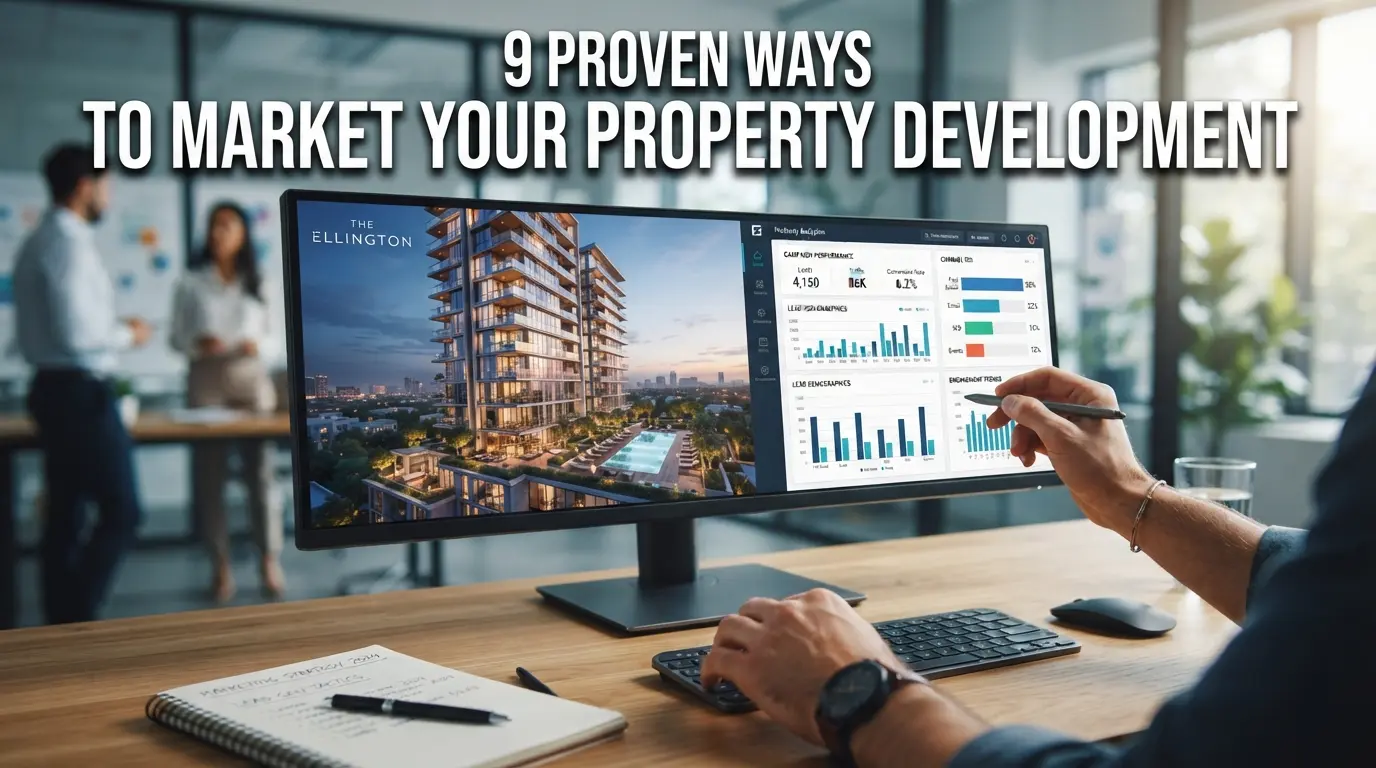
Way 9. Track KPIs and Refine the Campaign
KPIs (key performance indicators) are the metrics used to measure marketing success. Without tracking, you're guessing which channels work.
- Leads generated: Total inquiries from all channels
- Cost per lead: Ad spend divided by number of leads
- Site visits: Number of prospects who toured the property
- Conversion rate: Percentage of leads who made a purchase
Review performance weekly or monthly and reallocate budget to top-performing channels. If Instagram ads generate leads at ₦2,000 each and Google ads cost ₦8,000 per lead, shift spend accordingly.
How to Set a Marketing Budget for a Property Development
Marketing budget depends on project size, target buyer, and sales timeline. Common approaches include setting a percentage of projected sales revenue or a fixed amount per unit. Off-plan projects often require higher upfront spend to build awareness before units are ready.
- Content production: Photography, video, virtual tours
- Paid advertising: Social ads, search ads, retargeting
- Agent commissions: Fees for third-party sales partners
- Platform listings: Fees for property portals and verified listing services
How to Market Off-Plan and Pre-Launch Developments
Off-plan sales mean selling units before or during construction. Marketing off-plan is different because buyers cannot see the finished product, so trust and visualization matter more.
Payment Plans and Milestone Pricing
Installment payment structures attract buyers who cannot pay outright. Milestone-linked payments (foundation, roofing, completion) spread the cost and reduce buyer risk. Communicate payment terms clearly in all marketing materials.
Pre-Launch Waitlists and Deposits
Build a waitlist before public launch to gauge demand and secure early commitments. Refundable deposits lower the barrier to entry. Early-bird pricing rewards buyers who commit before construction completes.
Trust Signals for Off-Plan Buyers
Buyers look for developer track record, title document status, construction timeline, and payment protection. Third-party verification (such as Realinkr's listing vetting process) reduces buyer hesitation and builds confidence.
Move Faster on Your Next Development With Realinkr
Marketing a property development well means starting early, knowing your buyer, and using the right mix of digital and offline channels. The developers who sell out fastest combine strong positioning, professional visuals, SEO-ready listings, and consistent lead follow-up.
Realinkr helps developers and agents reach high-intent buyers through verified listings, content marketing, and performance campaigns built for Nigerian markets. If you're launching a new project or struggling to move existing inventory, listing on a verified platform puts your properties in front of buyers who are ready to act.
Frequently Asked Questions About Marketing a Property Development
What is the 3-3-3 rule in real estate marketing?
The 3-3-3 rule is a guideline suggesting that a new listing gets the most attention in its first three weeks, three days, and three hours after going live. Marketers use this window to push visibility through ads, social posts, and agent outreach.
How long should a property development pre-launch campaign run?
A pre-launch campaign typically runs for several weeks to a few months before sales open, depending on project size. The goal is to build a waitlist and generate enough demand to sell the first phase quickly.
What does a qualified lead cost for a Nigerian property development?
Cost per qualified lead varies by location, property type, and ad platform. Developers can track their own campaigns to establish a baseline and compare channel performance.
Should a property developer hire an in-house marketer or work with an agency?
Smaller developers often benefit from agency partnerships because agencies bring specialized skills and established ad accounts. Larger developers with ongoing projects may justify an in-house team for tighter control.
How can marketing address buyer concerns about land title documents?
Marketing materials can state the title status clearly (C of O, Governor's Consent, Deed of Assignment) and offer to share documentation during inquiry. Listing on a verified platform signals that the title has been vetted before the property went live.
Deploy Algorithmic Buyer Acquisition on Your Portfolio
Accelerate sales velocity, reduce Cost Per Qualified Lead (CPL), and access verified high-net-worth buyers with Realinkr’s proven data infrastructure.