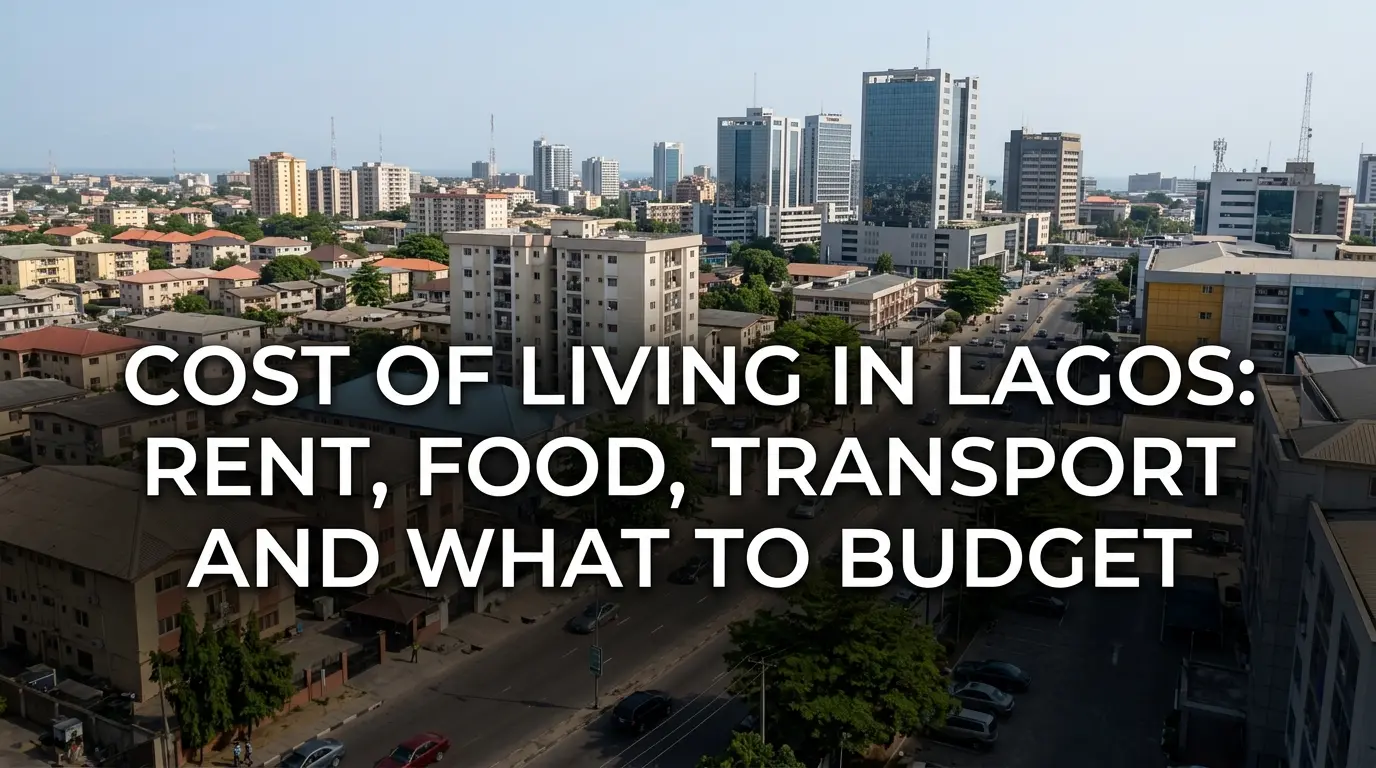
Lagos is a city of high-octane energy, architectural contrasts, and unparalleled economic dynamism. As Africa's most populous metropolitan area, it is a magnetic hub for tech startups, creative industries, and multinational corporations. However, navigating the financial ecosystem of Lagos in 2026 requires more than a simple estimation; it demands a highly strategic, granular breakdown of expenses. Whether you are an expat relocating to the high-rise corridors of Victoria Island, a digital nomad settling into the tech-fueled streets of Yaba, or a growing family looking to establish roots in Gbagada, understanding your monthly overheads is the key to thriving.
In this comprehensive guide, we dissect the practical cost of living in Lagos in 2026. From rent structures in hyper-local neighborhoods to food supply lines, transportation options, utility management, and the hidden costs of "Lagos life," we lay out the numbers you need to budget with absolute confidence.
The 2026 Lagos Monthly Budget Summary
To give you an immediate snapshot of the current landscape, here is a realistic monthly baseline budget for three common demographics in Lagos. These figures represent a balanced lifestyle covering comfortable accommodation, mid-tier grocery sourcing, weekly ride-hailing or fuel, utilities, and minor entertainment.
Cohort / Household Type Advertisement | Estimated Monthly Budget (NGN - ₦) | Estimated Monthly Budget (USD - Equivalent) |
Single Professional (Mid-Tier) | ₦450,000 - ₦800,000 | $265 - $470 |
Young Couple (No Kids - Mid-to-Premium) | ₦1,000,000 - ₦1,800,000 | $590 - $1,060 |
Family of Four (Premium Suburban) | ₦2,200,000 - ₦4,000,000 | $1,300 - $2,350 |
Realinkr Pro Tip: In Lagos, "cheap" can quickly become expensive. A lower monthly rent in a poorly managed property without standard drainage or reliable power infrastructure often translates into high auxiliary costs for diesel, vehicle repairs, and emergency water treatment. Always look for managed homes that aggregate these costs efficiently.
Rent in Lagos by Neighbourhood (2026)
Rental accommodation is, without question, the single largest expense you will face in Lagos. The city’s real estate is divided fundamentally into the Island (the high-end commercial and residential heartland) and the Mainland (the highly populated, culturally rich, and generally more affordable expanse).
In 2026, the rental market is characterized by a strong demand for modern apartments with structured service charges. These charges cover shared amenities like security, waste management, water purification, and central generator power.
If you want to Find affordable Lagos homes without the grueling, old-school method of physical house hunting, the Realinkr platform allows you to screen listings by neighborhood, verified amenities, and actual service charges in real-time. This saves you weeks of chasing down deceptive roadside agents.
Here is what you can expect to pay annually for housing across different Lagos neighborhoods in 2026:
2026 Annual Rent Directory (in Millions of Naira - ₦M)
Area | Type of District | 1-Bedroom Apartment (₦) | 2-Bedroom Apartment (₦) | 3-Bedroom Apartment (₦) |
Ikoyi | Ultra-Premium (Island) | ₦8.5M - ₦13M | ₦16M - ₦24M | ₦26M - ₦38M |
Victoria Island (VI) | Commercial/Premium (Island) | ₦6.5M - ₦9.5M | ₦12M - ₦18M | ₦19M - ₦28M |
Lekki Phase 1 | Premium Residential (Island) | ₦4.8M - ₦7.2M | ₦8.5M - ₦13M | ₦13M - ₦19M |
Yaba | Tech/Student Hub (Mainland) | ₦2.0M - ₦3.2M | ₦3.2M - ₦4.8M | ₦4.8M - ₦7.0M |
Gbagada | Central Residential (Mainland) | ₦1.8M - ₦2.8M | ₦3.0M - ₦4.5M | ₦4.5M - ₦6.5M |
Surulere | Cultural Hub (Mainland) | ₦1.6M - ₦2.5M | ₦2.8M - ₦4.2M | ₦4.0M - ₦6.0M |
Alimosho | Suburban Budget (Mainland) | ₦600k - ₦950k | ₦1.0M - ₦1.6M | ₦1.6M - ₦2.4M |
Ikorodu | Far Suburban Budget (Mainland) | ₦400k - ₦700k | ₦750k - ₦1.2M | ₦1.2M - ₦1.8M |
Understanding the Sub-Markets:
- The Premium Island Tier (Ikoyi, VI, Lekki Phase 1): These areas cater to high-net-worth individuals, expats, and successful corporate executives. Properties here usually require a service charge paid in addition to the rent, ranging from ₦1.5M to ₦4M annually to cover 24/7 security, treated water, and 12-to-24-hour power guarantees.
- The Mid-Market Mainland Sweet Spots (Yaba, Gbagada, Surulere): Loved by young professionals and mid-level managers. Gbagada is highly prized because of its central geographical position, allowing commuters easy access to both the Island and other Mainland hubs. Yaba remains the creative and tech hub, boasting highly functional, albeit slightly compact, modern "mini-flats" (1-bedroom self-contained units).
- The Budget Frontiers (Alimosho, Ikorodu): For those working remotely or with flexible commute requirements, these massive residential districts offer incredibly cheap rental rates. However, what you save in rent, you may end up spending in travel time and transportation costs if you commute daily to the business districts.
Food and Groceries in Lagos
Your culinary budget in Lagos will vary wildly depending on where you shop and what you eat. The city features three main grocery tiers, and a smart resident uses a mix of all three to optimize their monthly cash flow.
The Three Sourcing Tiers
- Modern Supermarkets (Shoprite, Spar, Market Square, Prince Ebeano): Best for packaged goods, dairy, toiletries, and imported food items. These outlets offer convenience, air conditioning, and predictable pricing, but they are subject to inflationary adjustments on imported inventory.
- Open-Air Wholesale Markets (Mile 12, Balogun, Oyingbo): This is where you go for bulk shopping. Mile 12 is the primary hub for fresh foodstuffs like tomatoes, peppers, onions, yams, and plantains direct from farmers. Buying in bulk here and sharing with family or neighbors can slash your food budget by up to 50%.
- Local Bukas and Street Food: For those on the move, local "bukas" (neighborhood eateries) serve staples like jollof rice, pounded yam, egusi soup, and amala. These are incredibly affordable, delicious, and highly accessible, but require a strong stomach and trusted vendors.
Transport in Lagos: What It Really Costs
Lagos transit is defined by one word: traffic. The city's geographic layout—comprising a series of islands linked to a massive mainland by massive bridges (such as the Third Mainland Bridge) creates natural funnels that can dramatically increase commute times.
Here is how the transportation breakdown works in 2026:
- Ride-Hailing (Uber, Bolt, Rida, LagosRide): For safety and convenience, ride-hailing is the primary choice for young professionals on the Island. A single, one-way trip from Surulere or Yaba to Victoria Island during peak hours can cost between ₦4,500 and ₦8,000 depending on surge pricing. If you use ride-hailing daily, expect to spend between ₦180,000 and ₦300,000 per month.
- Personal Car Ownership: While owning a car offers freedom, the cost of petrol, routine suspension repairs due to potholes, and toll gate charges (on the Lekki-Epe expressway) adds up. Budget about ₦180,000 - ₦280,000 monthly for fuel and basic maintenance on a standard sedan.
- BRT (Bus Rapid Transit): The government-regulated blue buses run on dedicated lanes. They are highly structured, clean, air-conditioned, and remarkably fast during rush hours because they bypass heavy traffic. A monthly BRT budget for a standard daily commuter sits comfortably at ₦30,000 - ₦50,000.
- Danfo & Keke Marwa (Yellow Buses & Tricycles): These are the ubiquitous, informal veins of Lagos transportation. They are cheap (costing ₦300 - ₦800 per leg of a journey) but are physically demanding, lack air conditioning, and do not follow strict safety standards.
Utilities: Electricity, Water, and Internet
Maintaining a functional home in Lagos requires managing your own utilities, as the public infrastructure can sometimes be unpredictable.
1. Electricity (EKEDC & IKEDC)
Lagos is powered primarily by two distribution companies: Eko Electricity Distribution Company (EKEDC) on the Island and parts of the mainland coast, and Ikeja Electric (IKEDC) across the rest of the Mainland.
Most high-end estates and modern serviced apartments are on "Band A" grid feeders, which guarantee a minimum of 20 hours of power daily but come at a premium tariff rate.
- Prepaid Meter Cost (Band A): Expect to spend roughly ₦50,000 - ₦180,000 monthly for moderate usage (air conditioning run mostly at night) also based on some areas.
- Alternative Power (Generators & Solar): Petrol and diesel generation are highly expensive fallback options in 2026. Many forward-thinking residents are choosing homes equipped with solar inverter setups. A 3kVA to 5kVA solar inverter installation costs between ₦2.5M and ₦4.5M upfront but eliminates monthly generator fuel bills entirely.
2. Water Delivery and Treatment
While municipal water exists in very few parts of Lagos, most homes rely on private boreholes. Due to the high water table, especially on the Island, water must be treated. In non-serviced apartments, you may have to pay a local plumber to maintain water treatment systems. In serviced units, this is bundled into your service charge.
3. Internet Connectivity
High-speed internet is essential in modern Lagos. Fiber-to-the-home (FTTH) providers have rapidly expanded. Let's look at the standard options:
- Starlink: The satellite network remains incredibly popular due to its high speeds and reliability in heavy rain. The monthly subscription is roughly ₦75,000, with a one-off hardware setup cost.
- Fiber Internet (MTN Fiber, ipNX, FiberOne): Exceptional for streaming and remote work. Monthly unlimited plans range from ₦25,000 to ₦45,000.
- 4G/5G MiFi Routers (MTN, Airtel, Smile): Best for single users or on-the-go professionals. Budgets typically average ₦15,000 - ₦25,000 monthly.
Lagos vs. Abuja vs. Port Harcourt: Cost Comparison
How does living in Lagos compare to Nigeria’s other major cities? Lagos remains the economic powerhouse, but it carries a distinct price premium.
- Abuja: The nation's capital offers superior infrastructure, wider roads, and far less traffic. While luxury rent in Maitama or Wuse is comparable to Ikoyi or VI, middle-tier housing and transportation are generally cheaper. Food prices can be slightly higher than in Lagos because of the lack of proximity to sea ports.
- Port Harcourt: The oil-rich capital of Rivers State has a lower overall cost of living than Lagos. Rent is significantly cheaper, but security and high-end services in exclusive zones like GRA Phase 2 can match Lagos Island pricing.
Is Lagos Worth It? The Honest Verdict
Despite the intense pace and premium costs, Lagos offers an unmatched return on investment for career growth, business networking, and cultural enrichment. It is a city where fortunes are built, dreams are commercialized, and the lifestyle is electrifyingly vibrant.
If you plan to make Lagos your home, the secret to financial survival lies in early, smart property matching. The traditional way of renting, relying on disconnected local agents, paying endless inspection fees, and encountering unserviced homes with hidden structural defects can easily wipe out your moving budget before you even unpack.
The Realinkr Difference: To bypass this stress, use Realinkr to find verified listings directly from landlords and developer-managed agencies. Realinkr's intelligent platform streamlines the real estate search process, giving you clear visibility into rental pricing, genuine service fees, and actual power availability across Lagos's most desirable neighborhoods.
With proper planning, a realistic budget, and the right digital tools to secure your home, you can confidently turn Lagos’s intense energy into your greatest personal and professional advantage.
Deploy Algorithmic Buyer Acquisition on Your Portfolio
Accelerate sales velocity, reduce Cost Per Qualified Lead (CPL), and access verified high-net-worth buyers with Realinkr’s proven data infrastructure.